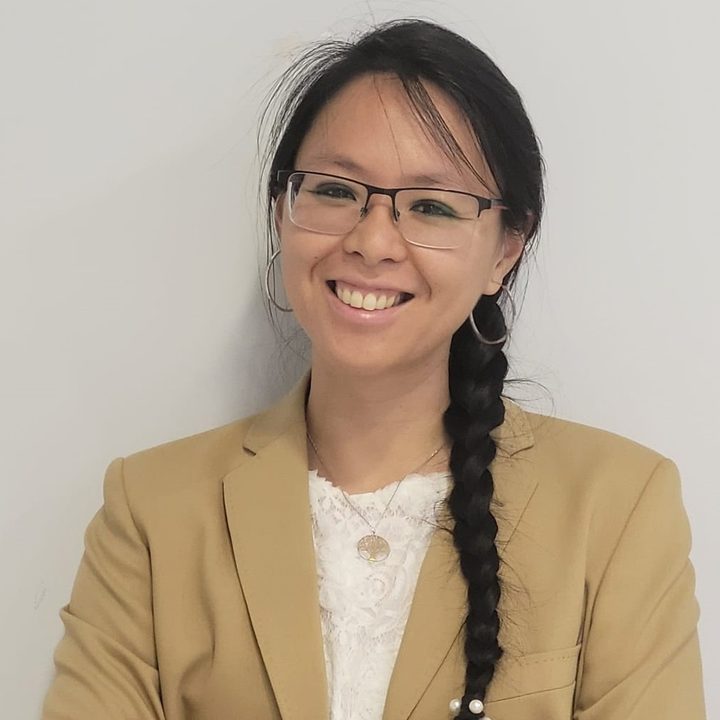
Cheila Ng Hó

Applied Human Systems Engineer

Making human complexity understandable.

When a decision keeps stalling, a team uses AI without shared criteria, or a change is not landing: the pattern behind it becomes visible, so you can decide with more clarity.

An engineer reads a system before changing it. I read human systems the same way: how people perceive, interpret, decide and relate, in a life, a team or an organization. I make that visible, so decisions rest on what is actually happening, not on assumptions.

Work with me

Two ways in.

Leaders

For founders, leaders and consultants

For decisions, career transitions and recurring patterns in the work of those who lead and decide.

  • An important decision keeps being postponed
  • A change of direction in your career or business
  • A pattern that keeps repeating in the way you lead
  • AI is changing how you work, and it is not yet clear what to delegate and what to keep yours
Recognition Session

90 minutes of structured conversation, followed by a written report: what was observed, the pattern that organizes it, and questions to work with in the weeks after.

Two-month program

Eight weekly sessions, with three written syntheses: at the start, midway and at the end.

A structured process of reflection and analysis, to identify patterns, understand the situation and decide with more clarity.

Organizations & AI

For leaders and teams adopting AI

AI is changing roles and decisions faster than most teams can read what it changes. I map how your organization actually decides and works, and where AI already sits in it.

  • Roles or functions are being redesigned because of AI
  • People need reskilling or new roles, and it is not yet clear where each one can grow, inside the company or as an external partner
  • The team uses AI daily, without shared criteria for what to delegate
  • A change is not landing, despite the training
  • People deliver faster with AI, but it is not clear whether they still understand and own the work
Start with a Clarification Map

A conversation of up to two hours with the person responsible, a map of how the situation is organized today, including connections no one had named, and a follow-up conversation to go through it. A paid first step, with a fixed fee sent on request.

If you want to go further: a reading of how the seven dimensions relate in the organization and where difficulties arise, then structured conversations with the people involved. A full process usually takes two to four weeks, with a fixed proposal after the map.

How it works

From conversation to clarity.

Not every situation needs every step. Each one is agreed before it starts.

  1. Conversation

    90 minutes for individuals; up to two hours for organizations, with the person or team who lives the situation. Recording is optional: only with everyone’s agreement, and with purpose and confidentiality agreed beforehand.

  2. Map or report

    Organizations receive a map of how decisions, roles and dependencies connect. Individuals can receive a written recognition report.

  3. Reading

    For organizations, a reading across seven dimensions, from perception to integration, to see how they relate and where difficulties arise.

  4. Structured conversations

    Sessions with the people involved, translating what each one means by the same words until there is a shared language.

Decisions stay with the people responsible. Often, what looks like right and wrong is different perceptions of the same reality. My work is to make them visible to each other, and to separate what we know from what we assume.

What a map looks like

An illustrative example based on first conversations with organizations, with identifying details changed. On the left, sentences from the conversations. On the right, a structural reading that organizes what they mean and how they relate. It is a reading to check with the people involved, not an established fact.

Before · what was said

  • “We want the organization to work beyond one person.”
  • “We have a lot of knowledge, but it is hard to package it clearly.”
  • “There are many initiatives happening at the same time.”
  • “We need to organize what already exists.”
  • “We want to turn expertise into clearer offers.”
  • “Some things are already working, but they are not yet integrated.”
  • “There are events, services and different ideas in motion.”
  • “The structure is still growing.”
  • “It is difficult to see the whole picture.”

After · a structural reading, to confirm

IdentityWho is this organization?
An organization built around knowledge, guidance and practical transformation.
PurposeWhy does it exist?
To make valuable knowledge more visible, usable and shareable.
Core capabilitiesWhat does it know how to do, beyond specific products?
Recognizing patterns, structuring complexity, translating expertise, supporting clarity and decisions.
ManifestationsHow does it show up in the world?
Workshops, advisory work, learning programs, conversations and collaborative projects.
OrganizationHow is it organized to fulfill its purpose?
A growing structure with leadership, specialized collaborators and evolving coordination.

The pieces were already there. The reading shows how they connect.

Experience

Where this work has already been done.

Nine years in softwareAnalysis, development and testing on projects for Glintt, Banco BPI and the Portuguese Parliament (Assembleia da República). At the Parliament I was hired to lead the team: I made the project’s estimates and plan and rebuilt its main database, with contributions from junior and senior colleagues.
Inside organizationsA two-month program for an IT consulting team at Glintt (2019) and a research report on digital transformation for the same company (2020), on why digital change is first organizational and human. Today, organizational maps built from real data, with founders and consultancies.
Years of paid adult programsMulti-month learning groups since 2020, some running for two full years, plus a reflective learning program at a senior university.

Testimonials

What people say about the work

“You have a very fast and very targeted capacity for analysis. That makes me feel very comfortable. […] It really needs to be developed further, because it’s done well.”
Michelle Chan · CEO, Pro NobisRecognition session · translated from Portuguese
“I think your visual organization will help people think, reflect and even push back more clearly on what they don’t want.”
Hugo Cid · Managing Partner, Interface ManagementOrganizational mapping with a business consultancy · translated from Portuguese
“You took what is broad and general for us and turned it into an incredible level of specification. It’s like reading the fine print on a product label. A real architect: an architect of thought.”
Leia Oliver · Founder, Hive AcademyOrganizational mapping · translated from Portuguese
“I sat with that for a while and did not have a clean answer. That was the point. She was not trying to resolve the relationship in an hour, only to make it observable.”
Asad Ijaz · Founder, ReeboootWorking With AI webinar

About

From software to human systems.

Cheila Ng Hó

I trained and worked as a computer engineer. Inside technology projects I kept seeing the same thing: what failed was often not the technology. It was how people understood, decided and worked together around it.

So I studied and practiced that side for years, with adults, groups, schools and organizations. Today I bring all of this together in one practice, which includes the place AI now holds.

Based in Portugal. Working online and in person, in English and Portuguese.

Four fields that meet in human integration: technology, organizations, human development and education TechnologyOrganizationsHumandevelopmentEducation Humanintegration
  • Technology: how we keep learning and evolving while technology comes with us.
  • Organizations: how we organize ourselves as a whole.
  • Human development: how each person grows inside those systems.
  • Education: how people learn over time, at school, at work, in health.
  • Human integration: where the four meet, and patterns become visible.
  1. Degree in Management Information Systems EngineeringInstituto Politécnico de Setúbal

  2. Software engineeringAnalysis, development and testing: Glintt, Banco BPI, Portugal Telecom, Portuguese Parliament (Assembleia da República)

  3. First book publishedI Talk To You: Awakening to Life · written in late 2014, from observing an inner process lived first-hand · second edition 2023 · Amazon

  4. Postgraduate studies in psychology for work contextsISPA, Instituto Universitário

  5. Mindset Upgrade program at GlinttTwo months of learning and development for an IT consulting team

  6. Research report on digital transformationGlintt · from digital change to organizational and human change

  7. Independent practiceLong-term paid adult learning programs, study groups and one-to-one work, and a reflective practice of observing without identifying with what is observed

  8. Second book publishedI Talk To You: From Depression to Enlightenment · English edition 2023 · Amazon

  9. Mind ForumReflective learning program for senior adults, Universidade Sénior do Seixal

  10. Digital learning in schools

  11. Erasmus+ international trainingDigital mentorship for inclusion; active listening and experiential learning

  12. Working With AIWebinar series on what we delegate to AI and what remains ours

  13. Applied Human Systems EngineeringThe name and structure given to the practice that integrates technology, education, organizations and human development

Certified trainer (CCP, Portugal).

All books, in English and Portuguese

What others noticed

“We find opportunities for reflection that draw rarely explored connections between fields as different as psychology, mathematics, philosophy, and neuroscience. A unique and thought-provoking work.”
Vítor Vitorino · Psychologist and teacherI Talk To You: Awakening to Life · translated from Portuguese
“It describes, clearly and simply, how we form patterns that cover our natural state and keep us from seeing ourselves, and the beauty of life, as they really are. Reading it is like realizing we have spent much of our life pushing a door to get out, until someone finally tells us: the door is open, it always was; just pull, it opens inward.”
Rui Pedro Pinto · ReaderI Talk To You: From Depression to Enlightenment · translated from Portuguese
“Thanks to her extraordinary way of communicating, she almost draws ideas, helping us see in a new light what once seemed dark and meaningless.”
Maria Sebastiana · ParticipantMind Forum, Universidade Sénior do Seixal · translated from Portuguese

AHSE

What is Applied Human Systems Engineering?

It is the name I gave, in 2026, to a practice that grew from integrating four fields I have learned and worked in since 2004: technology, education, organizations and human development. Since 2014 I have consciously observed what I learn and the patterns that repeat across these fields. My first book came out of that observation.

What changes from a technical system is what the system is made of: perception and meaning. So the reading starts with what people see and how they interpret it, and follows it through to decisions, action and learning.

AHSE is a practice built from experience, not an academic method.

Within AHSE, I use a seven-dimension metamodel to observe how human processes show up and relate to each other in a specific situation.

Seven dimensions read in a human system, from perception to integration1234567
The numbers link the drawing to the list. They are not a required order.

Seven dimensions I read

  • PerceptionWhat is observed and what is missed
  • MeaningHow experience and information are interpreted
  • CommunicationHow understanding is expressed and exchanged
  • DecisionHow judgments and choices are formed
  • ActionHow decisions turn into behavior
  • LearningHow experience changes what we recognize
  • IntegrationHow learning stays available over time

Dimensions, not levels

The seven dimensions do not describe where a person sits on a scale of development. They describe aspects of how a person functions, and how these show up and depend on each other varies with the person, the situation and the system they are part of. They do not always follow a linear sequence.

Someone who perceives a great deal may still find it hard to decide. That does not, in itself, mean they lack the ability: what may be missing is clear information, authority or shared criteria. The reading does not classify people or teams. It makes visible what is happening, what is still unclear and where it may make sense to act.

Over time

How this way of observing developed.

The same capacity, in three stages: observing myself, helping people observe themselves, and describing in real time how someone works with other people. Each stage adds to the one before; none has ended. Each one, in the words of someone who was on the other side of it.

1 · Observing myself Since 2015 Writing the books

“I was someone who lived very much in my past. […] I realized that changing my thoughts depends only on me […] and I see the good results in my day-to-day life. I also try to pass this on to the people close to me.”
Nadia Rangelova Lopes · ReaderI Talk To You: Awakening to Life · translated from Portuguese

2 · People learning to observe themselves Since 2020 Long-term groups, V.I.D.A. program and Mind Forum

“Thank you for giving me the chance to rebuild the way I think about myself, about others, and about everything around me. All of life’s hardships have become lighter.”
Maria Vitória Miguel · ParticipantMind Forum, Universidade Sénior do Seixal · translated from Portuguese

3 · Describing a practice in real time Since 2021 The same reading behind the organizational maps

“You bring me a technique behind what, for me, is natural. You can explain, technically, who I naturally am.”
Leia Oliver · Founder, Hive AcademyRecognition and translation of professional practice · translated from Portuguese
“You were explaining the way I welcome someone. You explained my whole process — all of it. As I listened, I kept thinking: why can’t I put this into words the way she does? You communicate in a very different way from me. And after our meeting, I was able to make that same move with someone, completely cleanly.”
Sofia Carrera Pérez · Human Experience DesignerRecognition and translation of professional practice · translated from Portuguese

Human and AI

How do we remain human in an increasingly artificial world?

It is the question behind all of my work, and one I live myself: using AI every day without losing presence, judgment and my own thinking.

In 2026 I started the webinar series Working With AI: What Is Changing in How We Think, Learn and Decide? It looks at what we delegate to AI, what remains ours, and how to use it without giving up our own thinking.

I am part of the proposer network of GASNET, a European COST Action proposal on how AI and digital coordination are changing work and social ties. I am also developing an applied project on how judgment, discernment and autonomy develop when AI is part of everyday work.

Same AI. Different people. Different relationships. Different outcomes.

  1. AI interventionWhat the system provides
  2. Human conditionsWho receives it
  3. The relationshipHow the person engages with the AI
  4. Human outcomesWhat changes, and what emerges

The outcome depends on the relationship. AI capability alone does not decide what happens to people: human agency, judgment, context and design shape it.

  • Trust
  • Agency
  • Critical judgment
  • Learning
  • Integration

Also available for talks and workshops on human capabilities in the AI era.

“Cheila brings humanity into systems and systems into humanity. She creates structure without losing the human side, and I really appreciate that. Before attending her webinar, I viewed AI as a tool that could weaken my own thinking, yet I still used it quite frequently. After the webinar, I started using it more selectively, asking myself whether I actually need it and, if so, how it can add value to my work without taking away my own contribution.”
Valerie Kovalčíková · StudentWorking With AI webinar

Questions

Short answers.

How are data and confidentiality handled?

What is said in the conversations is confidential. I use AI tools to help organize information, and I am the one who interprets it. The rules on recording, deletion and use for research are in the Privacy Policy.

Who is this for?

Founders, CEOs, consultants and leaders with long experience of working with people, and leadership teams introducing AI or redesigning roles.

Do you deliver solutions or recommendations?

I deliver clarity: a map, a written synthesis and a facilitated conversation. I do not decide for the organization or the person. Where it is agreed, I can stay involved while they act.

How do we start?

With a 30-minute conversation, to see whether it makes sense to move forward. Reading the situation is already part of the paid work: if there is a fit, we agree the scope, format and fee together.

Connect

Start with a 30-minute conversation.

Bring one specific situation: a decision that is stalled, a team that is not aligned, or a change that is not working. Tell me about it in a few lines and I will reply with a few possible times.

Engenheira de Sistemas Humanos Aplicados

Tornar a complexidade humana compreensível.

Quando uma decisão não avança, uma equipa usa IA sem critérios comuns ou uma mudança não está a resultar: o padrão por trás disso torna-se visível, para decidir com mais clareza.

Um engenheiro lê um sistema antes de o mudar. Eu leio os sistemas humanos da mesma forma: como as pessoas percebem, interpretam, decidem e se relacionam, numa vida, numa equipa ou numa organização. Torno isso visível, para que as decisões assentem no que está realmente a acontecer, e não em suposições.

Trabalhar comigo

Duas portas de entrada.

Líderes

Para fundadores, líderes e consultores

Para decisões, transições de carreira e padrões que se repetem no trabalho de quem lidera e decide.

  • Uma decisão importante que continua adiada
  • Uma mudança de rumo na carreira ou no negócio
  • Um padrão que se repete na forma de liderar
  • A IA está a mudar a forma como trabalha, e ainda não é claro o que delegar e o que manter seu
Sessão de Reconhecimento

90 minutos de conversa estruturada, seguidos de um relatório escrito: o que foi observado, o padrão que o organiza e perguntas para trabalhar nas semanas seguintes.

Programa de dois meses

Oito sessões semanais, com três sínteses escritas: no início, a meio e no fim.

Um processo estruturado de reflexão e análise, para identificar padrões, compreender a situação e decidir com mais clareza.

Organizações e IA

Para líderes e equipas que estão a adotar IA

A IA está a mudar funções e decisões mais depressa do que a maioria das equipas consegue perceber o que muda. Mapeio como a sua organização decide e trabalha de facto, e onde a IA já está presente.

  • Há funções a ser redesenhadas por causa da IA
  • Há pessoas a requalificar ou a mudar de função, e ainda não é claro onde cada uma pode crescer, dentro da empresa ou como parceira externa
  • A equipa usa IA todos os dias, sem critérios comuns sobre o que delegar
  • Uma mudança não está a resultar, apesar da formação
  • As pessoas entregam mais depressa com IA, mas não é claro se ainda percebem o trabalho e se respondem por ele
Começar com um Mapa de Clarificação

Uma conversa de até duas horas com a pessoa responsável, um mapa de como a situação está organizada hoje, incluindo ligações que ninguém tinha nomeado, e uma conversa de devolução para o percorrer. Um primeiro passo pago, com um valor fixo enviado a pedido.

Para ir mais longe: uma leitura de como as sete dimensões se relacionam na organização e onde surgem dificuldades e, depois, conversas estruturadas com as pessoas envolvidas. Um processo completo dura normalmente duas a quatro semanas, com proposta fechada depois do mapa.

Como funciona

Da conversa à clareza.

Nem todas as situações precisam de todas as etapas. Cada uma é acordada antes de começar.

  1. Conversa

    90 minutos para pessoas; até duas horas para organizações, com a pessoa ou a equipa que vive a situação. A gravação é opcional: só com o acordo de todos, e com a finalidade e a confidencialidade combinadas antes.

  2. Mapa ou relatório

    As organizações recebem um mapa de como se ligam decisões, papéis e dependências. As pessoas podem receber um relatório escrito de reconhecimento.

  3. Leitura

    Para organizações, uma leitura em sete dimensões, da perceção à integração, para ver como se relacionam e onde surgem dificuldades.

  4. Conversas estruturadas

    Sessões com as pessoas envolvidas, a traduzir o que cada uma quer dizer com as mesmas palavras, até haver uma linguagem comum.

As decisões ficam com quem tem a responsabilidade. Muitas vezes, o que parece certo ou errado são perceções diferentes da mesma realidade. O meu trabalho é torná-las visíveis umas para as outras e separar o que sabemos do que supomos.

Como é um mapa

Um exemplo ilustrativo baseado em primeiras conversas com organizações, com os elementos identificativos alterados. À esquerda, frases ditas nas conversas. À direita, uma leitura estrutural que organiza o que significam e como se relacionam. É uma leitura a confirmar com as pessoas envolvidas, não um facto estabelecido.

Antes · o que foi dito

  • “Queremos que a organização funcione para além de uma pessoa.”
  • “Temos muito conhecimento, mas é difícil empacotá-lo com clareza.”
  • “Há muitas iniciativas a acontecer ao mesmo tempo.”
  • “Precisamos de organizar o que já existe.”
  • “Queremos transformar conhecimento em ofertas mais claras.”
  • “Algumas coisas já funcionam, mas ainda não estão integradas.”
  • “Há eventos, serviços e ideias diferentes em movimento.”
  • “A estrutura ainda está a crescer.”
  • “É difícil ver o todo.”

Depois · uma leitura estrutural, a confirmar

IdentidadeQuem é esta organização?
Uma organização construída à volta de conhecimento, orientação e transformação prática.
PropósitoPorque existe?
Tornar conhecimento valioso mais visível, utilizável e partilhável.
Capacidades centraisO que sabe fazer, para além de produtos específicos?
Reconhecer padrões, estruturar complexidade, traduzir conhecimento, apoiar a clareza e a decisão.
ManifestaçõesComo aparece no mundo?
Workshops, consultoria, programas de formação, conversas e projetos em colaboração.
OrganizaçãoComo se organiza para cumprir o propósito?
Uma estrutura em crescimento, com liderança, colaboradores especializados e uma coordenação em evolução.

As peças já lá estavam. A leitura mostra como se ligam.

Experiência

Onde este trabalho já foi feito.

Nove anos em softwareAnálise, desenvolvimento e testes em projetos para a Glintt, o Banco BPI e a Assembleia da República. Na Assembleia fui contratada para liderar a equipa: fiz as estimativas e o plano do projeto e refiz a base de dados principal, com contributos de colegas mais júniores e mais séniores.
Dentro das organizaçõesUm programa de dois meses para uma equipa de consultoria de TI da Glintt (2019) e um relatório de investigação sobre transformação digital para a mesma empresa (2020), sobre porque é que a mudança digital é, antes de tudo, organizacional e humana. Hoje, mapas organizacionais construídos a partir de dados reais, com fundadores e consultoras.
Anos de programas pagos para adultosGrupos de aprendizagem de vários meses desde 2020, alguns durante dois anos completos, e um programa de aprendizagem reflexiva numa universidade sénior.

Testemunhos

O que dizem sobre o trabalho

“Acho que tens uma capacidade de análise muito rápida e muito dirigida. Isso deixa-me muito confortável. […] Acho que tem mesmo que ser potenciado, porque é bem feito.”
Michelle Chan · CEO da Pro NobisSessão de reconhecimento
“Acho que a tua organização visual vai ajudar a pensar, a refletir e até a objetar melhor aquilo que não se quer.”
Hugo Cid · Sócio-gerente da Interface ManagementMapeamento organizacional com uma consultora de negócios
“Você pegou aquilo que é abrangente para nós e está trazendo isso para uma especificação incrível. É como ler as letrinhas pequenas do rótulo do produto. Uma arquiteta mesmo: uma arquiteta de pensamento.”
Leia Oliver · Fundadora da Hive AcademyMapeamento organizacional
“Fiquei a pensar nisso durante algum tempo e não tinha uma resposta simples. Era esse o objetivo. Ela não estava a tentar resolver a relação numa hora, apenas torná-la observável.”
Asad Ijaz · Fundador da ReeboootWebinar Working With AI · traduzido do inglês

Sobre

Do software aos sistemas humanos.

Cheila Ng Hó

Formei-me e trabalhei como engenheira informática. Dentro dos projetos de tecnologia via sempre a mesma coisa: muitas vezes não era a tecnologia que falhava. Era a forma como as pessoas compreendiam, decidiam e trabalhavam juntas à volta dela.

Por isso estudei e pratiquei esse lado durante anos, com adultos, grupos, escolas e organizações. Hoje junto tudo isto numa só prática, que inclui o lugar que a IA passou a ocupar.

Em Portugal. Trabalho online e presencialmente, em português e em inglês.

Quatro áreas que se encontram na integração humana: tecnologia, organizações, desenvolvimento humano e educação TecnologiaOrganizaçõesDesenvolvimentohumanoEducação Integraçãohumana
  • Tecnologia: como continuamos a aprender e a evoluir enquanto a tecnologia nos acompanha.
  • Organizações: como nos organizamos enquanto todo.
  • Desenvolvimento humano: como cada pessoa evolui dentro desses sistemas.
  • Educação: como as pessoas aprendem ao longo do tempo, na escola, no trabalho, na saúde.
  • Integração humana: onde as quatro se encontram e os padrões se tornam visíveis.
  1. Licenciatura em Engenharia Informática de GestãoInstituto Politécnico de Setúbal

  2. Engenharia de softwareAnálise, desenvolvimento e testes: Glintt, Banco BPI, Portugal Telecom, Assembleia da República

  3. Primeiro livroEu Falo Contigo: O Despertar para a Vida · escrito no final de 2014, a partir da observação de um processo interno vivido na primeira pessoa · 2.ª edição e edição inglesa em 2023 · Amazon

  4. Pós-graduação em Psicologia para Não Psicólogos: Aplicações em Contexto de TrabalhoISPA, Instituto Universitário

  5. Programa Mindset Upgrade na GlinttDois meses de aprendizagem e desenvolvimento para uma equipa de consultoria de TI

  6. Relatório de investigação sobre transformação digitalGlintt · da mudança digital à mudança organizacional e humana

  7. Prática independenteProgramas pagos de longa duração para adultos, grupos de estudo e trabalho individual, e prática reflexiva sobre a posição de quem observa sem se identificar com o que observa

  8. Segundo livroEu Falo Contigo: Da Depressão à Iluminação · edição inglesa em 2023 · Amazon

  9. Fórum da MentePrograma de aprendizagem reflexiva para adultos seniores, Universidade Sénior do Seixal

  10. Ensino digital em escolas

  11. Formação internacional Erasmus+Mentoria digital para a inclusão; escuta ativa e aprendizagem experiencial

  12. Working With AISérie de webinars sobre o que delegamos à IA e o que continua a ser nosso

  13. Engenharia Aplicada a Sistemas HumanosNome e estrutura dados à prática que integra tecnologia, educação, organizações e desenvolvimento humano

Formadora certificada (CCP).

Todos os livros, em português e inglês

O que outros notaram

“Encontramos propostas de reflexão com ligações muito pouco exploradas de ciências tão diferentes como a Psicologia, a Matemática, a Filosofia e as Ciências Neurológicas. Uma obra ímpar e desafiadora.”
Vítor Vitorino · Psicólogo e professorEu Falo Contigo: O Despertar para a Vida
“Descreve duma forma clara e simples como formamos padrões que encobrem o nosso estado natural, impedindo de ter a visão real sobre nós mesmos e sobre a beleza da vida. Ler “Eu Falo Contigo” é como tomar consciência de que gastamos grande parte da vida a tentar empurrar uma porta para sair, quando por fim alguém nos diz: a porta está aberta e, na verdade, sempre esteve; apenas puxa, ela abre para dentro.”
Rui Pedro Pinto · LeitorEu Falo Contigo: Da Depressão à Iluminação
“Graças à sua extraordinária forma de comunicar, quase que desenha as ideias, e conseguimos ver com luz o que parecia escuro e sem sentido.”
Maria Sebastiana · ParticipanteFórum da Mente, Universidade Sénior do Seixal

AHSE · do inglês Applied Human Systems Engineering

O que é a Engenharia Aplicada a Sistemas Humanos?

É o nome que dei, em 2026, a uma prática que nasceu da integração de quatro áreas onde aprendi e trabalhei desde 2004: tecnologia, educação, organizações e desenvolvimento humano. Desde 2014 observo, de forma consciente, o que vou aprendendo e os padrões que se repetem entre essas áreas. O meu primeiro livro nasceu dessa observação.

O que muda em relação a um sistema técnico é aquilo de que o sistema é feito: perceção e significado. Por isso, a leitura começa no que as pessoas veem e em como o interpretam, e acompanha isso até às decisões, à ação e à aprendizagem.

A AHSE é uma prática construída a partir da experiência, não um método académico.

Dentro da AHSE, uso um metamodelo de sete dimensões para observar como os processos humanos se manifestam e se relacionam numa situação concreta.

Seven dimensions read in a human system, from perception to integration1234567
Os números ligam o desenho à lista. Não indicam uma ordem obrigatória.

As sete dimensões que leio

  • PerceçãoO que é observado e o que escapa
  • SignificadoComo a experiência e a informação são interpretadas
  • ComunicaçãoComo a compreensão é expressa e partilhada
  • DecisãoComo se formam juízos e escolhas
  • AçãoComo as decisões se tornam comportamento
  • AprendizagemComo a experiência muda o que reconhecemos
  • IntegraçãoComo a aprendizagem se mantém disponível ao longo do tempo

Dimensões, não níveis

As sete dimensões não descrevem onde uma pessoa se encontra numa escala de desenvolvimento. Descrevem aspetos do seu funcionamento, cuja expressão e interdependência variam conforme a pessoa, a situação e o sistema em que participa. Nem sempre seguem uma sequência linear.

Quem perceciona muito pode, ainda assim, ter dificuldade em decidir. Isso não significa, por si só, que lhe falte capacidade: pode faltar informação clara, autoridade ou critérios comuns. A leitura não classifica pessoas nem equipas. Torna visível o que está a acontecer, o que ainda está por esclarecer e onde pode fazer sentido intervir.

Ao longo do tempo

Como esta forma de observar se desenvolveu.

A mesma capacidade, em três fases: observar-me a mim mesma, acompanhar pessoas a observarem-se a si próprias, e descrever em tempo real como alguém trabalha com outras pessoas. Cada fase soma-se à anterior; nenhuma terminou. Cada uma, nas palavras de quem esteve do outro lado.

1 · Observar-me a mim mesma Desde 2015 A escrita dos livros

“Eu era uma pessoa que vivia muito no meu passado. […] Eu percebi que depende só de mim mudar os meus pensamentos […] e vejo os resultados bons no meu dia-a-dia. Também tento passar esta informação às pessoas próximas.”
Nadia Rangelova Lopes · LeitoraEu Falo Contigo: O Despertar para a Vida

2 · Pessoas a aprender a observar-se Desde 2020 Grupos de longa duração, Curso V.I.D.A. e Fórum da Mente

“Agradeço ter-me dado a possibilidade de refazer a minha maneira de pensar sobre mim, os outros e tudo o que me rodeia. Tornaram-se mais leves todas as agruras da vida.”
Maria Vitória Miguel · ParticipanteFórum da Mente, Universidade Sénior do Seixal

3 · Descrever uma prática em tempo real Desde 2021 O mesmo olhar por trás dos mapas organizacionais

“Você me traz uma técnica que está por trás daquilo que para mim é natural. Você consegue explicar tecnicamente quem eu sou, naturalmente.”
Leia Oliver · Fundadora da Hive AcademyReconhecimento e tradução da prática profissional
“Estavas a explicar a forma como eu acolho uma pessoa. Explicaste todo o meu processo — todo. Enquanto te ouvia, só pensava: porque é que eu não consigo pôr isto em palavras como ela põe? Comunicas de uma forma muito diferente da minha. E, depois da nossa reunião, consegui fazer esse mesmo movimento com uma pessoa, de uma forma completamente limpa.”
Sofia Carrera Pérez · Human Experience DesignerReconhecimento e tradução da prática profissional

Humano e IA

Como permanecermos humanos num mundo cada vez mais artificial?

É a pergunta por trás de todo o meu trabalho, e uma que eu própria vivo: usar a IA todos os dias sem perder a presença, o discernimento e o meu próprio pensamento.

Em 2026 comecei a série de webinars Working With AI: o que está a mudar na forma como pensamos, aprendemos e decidimos? Olha para o que delegamos à IA, o que continua a ser nosso e como a usar sem abdicar do nosso próprio pensamento.

Faço parte da rede de proponentes do GASNET, uma proposta de Ação COST europeia sobre a forma como a IA e a coordenação digital estão a mudar o trabalho e os laços sociais. Estou também a desenvolver um projeto aplicado sobre como o julgamento, o discernimento e a autonomia se desenvolvem quando a IA faz parte do trabalho diário.

A mesma IA. Pessoas diferentes. Relações diferentes. Resultados diferentes.

  1. Intervenção da IAO que o sistema oferece
  2. Condições humanasQuem a recebe
  3. A relaçãoComo a pessoa se relaciona com a IA
  4. Resultados humanosO que muda e o que surge

O resultado depende da relação. A capacidade da IA, sozinha, não decide o que acontece às pessoas: a autonomia, o discernimento, o contexto e o desenho da relação é que a moldam.

  • Confiança
  • Autonomia
  • Discernimento crítico
  • Aprendizagem
  • Integração

Disponível também para palestras e workshops sobre capacidades humanas na era da IA.

“A Cheila traz humanidade aos sistemas e sistemas à humanidade. Cria estrutura sem perder o lado humano, e aprecio muito isso. Antes do webinar, via a IA como uma ferramenta que podia enfraquecer o meu próprio pensamento, e mesmo assim usava-a com frequência. Depois do webinar, comecei a usá-la de forma mais seletiva, perguntando-me se preciso mesmo dela e, se sim, como pode acrescentar valor ao meu trabalho sem me tirar a minha própria contribuição.”
Valerie Kovalčíková · EstudanteWebinar Working With AI · traduzido do inglês

Perguntas

Respostas curtas.

Como são tratados os dados e a confidencialidade?

O que é dito nas conversas é confidencial. Uso ferramentas de IA como apoio para organizar a informação, e quem a interpreta sou eu. As regras sobre gravação, apagamento e uso para investigação estão na Política de Privacidade.

Para quem é?

Para fundadores, CEOs, consultores e líderes com longa experiência a trabalhar com pessoas, e para equipas de liderança que estão a introduzir IA ou a redesenhar funções.

Entrega soluções ou recomendações?

Entrego clareza: um mapa, uma síntese escrita e uma conversa facilitada. Não decido pela organização nem pela pessoa. Quando acordado, posso acompanhar enquanto agem.

Como começamos?

Com uma conversa de 30 minutos, para perceber se faz sentido avançar. A leitura da situação já é parte do trabalho pago: se houver encaixe, acordamos juntos o âmbito, o formato e o valor.

Contacto

Comece com uma conversa de 30 minutos.

Traga uma situação concreta: uma decisão que não avança, uma equipa desalinhada ou uma mudança que não está a resultar. Diga-me em poucas linhas e respondo com algumas datas possíveis.